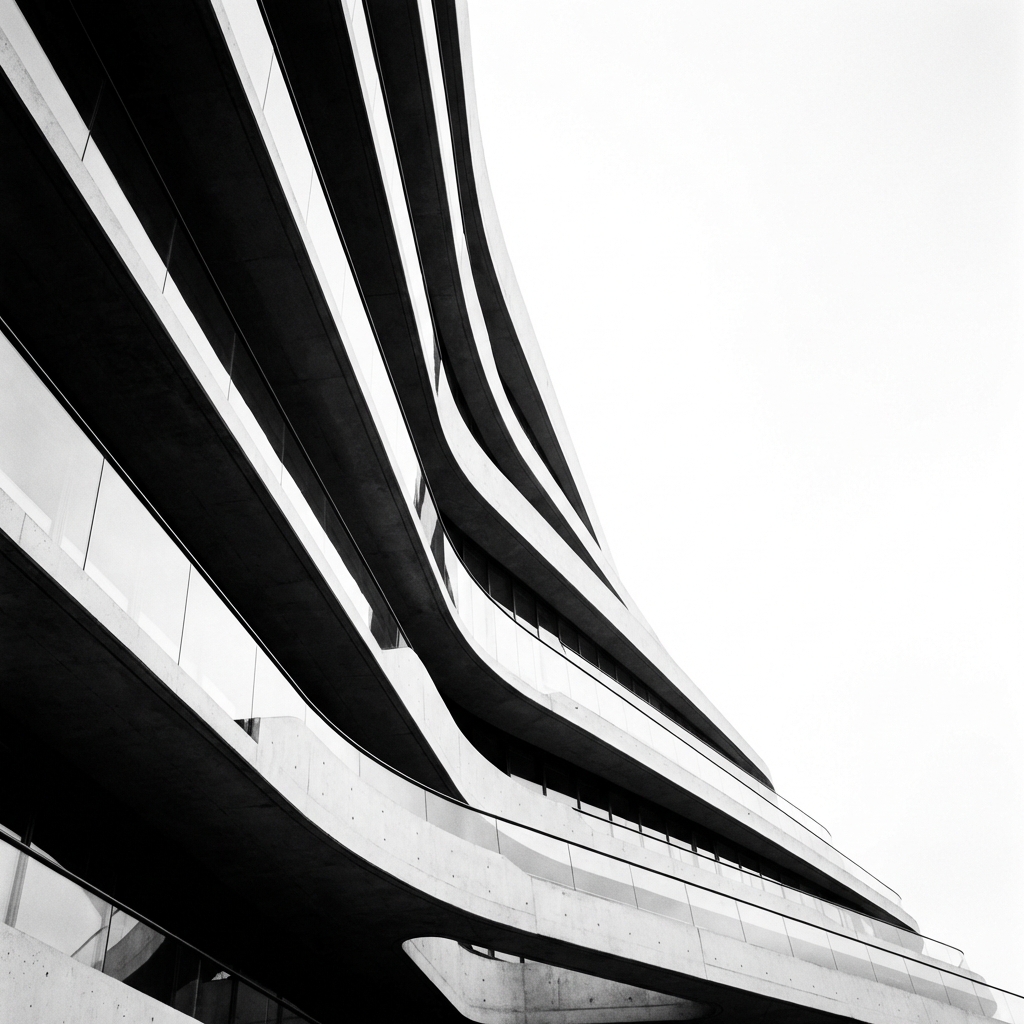
We all know the tic-tac-toe grid. Put the horizon on the line. Put the eye on the intersection. It works. But it's also predictable. To create cinematic work, we need to look at more dynamic forms of composition.
1. Leading Lines (with Intention)
Lines shouldn't just exist; they should travel. A road, a fence, a shadow—they are arrows pointing the viewer's eye. If your leading lines point to empty space, the viewer feels frustrated. Make sure the Payoff (the subject) is at the end of the Journey (the line).
2. Negative Space
Minimalism screams confidence. By surrounding a small subject with vast emptiness (darkness, sky, or a blank wall), you emphasize their isolation or importance.
"If your pictures aren't good enough, you aren't close enough. Or you haven't stepped back far enough."
3. Center Composition
Wes Anderson does it. Kubrick did it. Placing a subject dead center creates a sense of stability, power, or confrontation. It breaks the rule of thirds, but engages the viewer directly. Use this for portraits where the subject is staring down the lens.
Exercise
Go out today and shoot 50 frames. But here's the rule: You cannot put the subject in the Rule of Thirds intersections. Force yourself to use the center or the extreme edges.